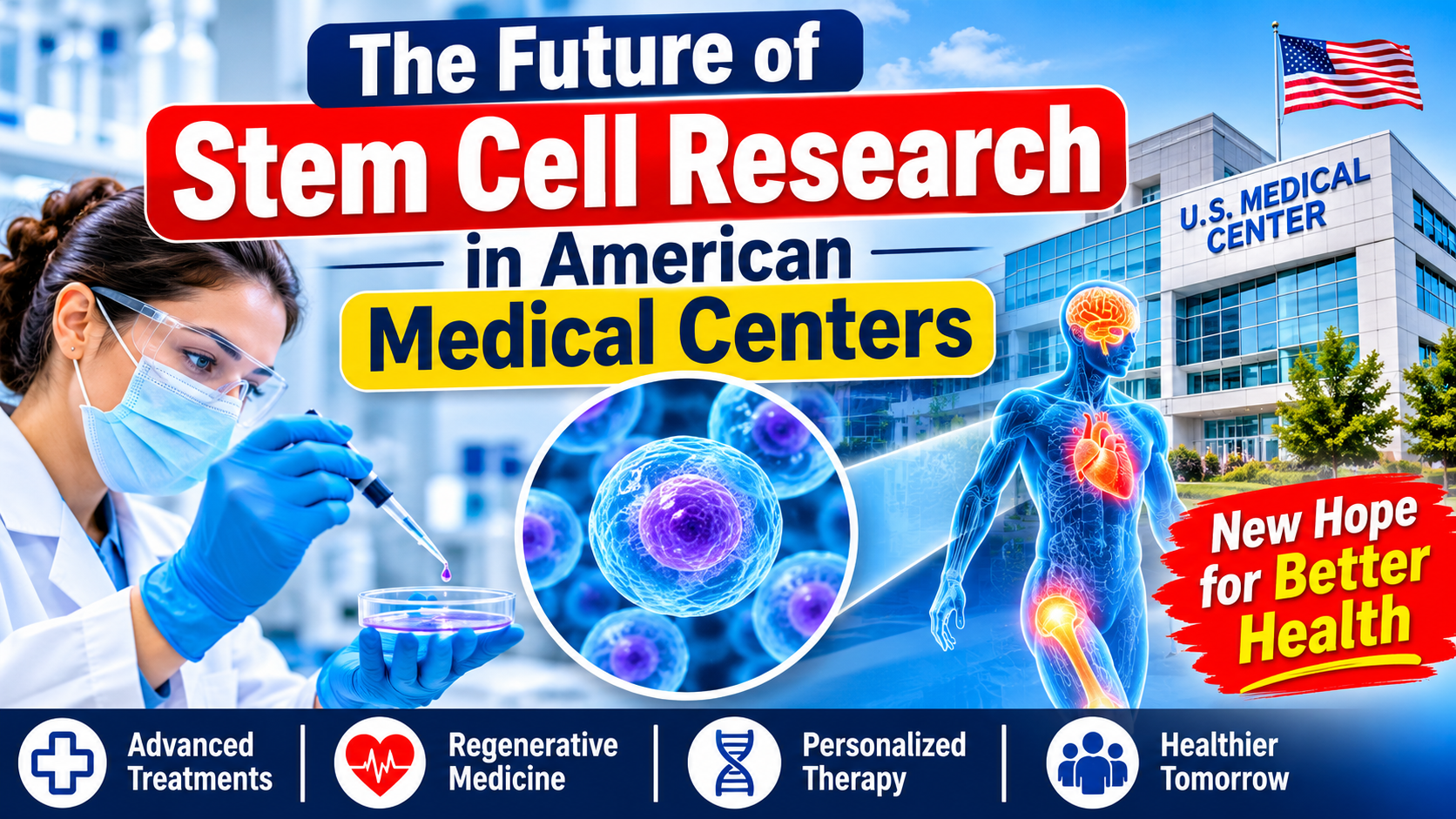
Stem cell research is moving from experimental trials toward mainstream clinical practice across American medical centers, driven by advances in gene editing, 3D bioprinting, and artificial intelligence. Institutions like Mayo Clinic, Johns Hopkins, and Stanford Medicine are leading efforts to treat spinal cord injuries, cancer, heart disease, and diabetes through regenerative therapies, though ethical and regulatory questions still shape how quickly these treatments reach patients.
Stem cell research has quietly reshaped what doctors believe is possible. A therapy once confined to laboratory dishes and animal models now informs real treatment plans for patients with spinal cord injuries, blood cancers, and degenerative diseases. The science isn’t finished, but the direction is unmistakable: regenerative medicine is becoming a standard part of the American medical toolkit rather than a futuristic promise.
American medical centers occupy a unique position in this story. Universities and hospitals such as Mayo Clinic, Johns Hopkins Medicine, and Stanford Medicine combine deep research funding, advanced lab infrastructure, and access to patient populations large enough to run meaningful clinical trials. That combination has turned the United States into one of the most active environments for stem cell science, even as researchers continue to debate ethical boundaries and regulatory pathways.
This post examines where stem cell research stands today, which breakthroughs show the most promise, and why American medical centers are positioned to lead the next decade of regenerative medicine. Along the way, we’ll look at the ethical debates, technological tools, and economic forces shaping this fast-moving field.
What Are Stem Cells and Why Do They Matter?
Stem cells are the body’s raw material. Every other specialized cell—whether it becomes part of a heart, a nerve, or a blood vessel—originates from a stem cell. This foundational role is why researchers consider stem cells central to the future of medicine.
What are the different types of stem cells?
Scientists generally classify stem cells into three categories:
- Embryonic stem cells, derived from early-stage embryos, can differentiate into nearly any cell type in the body. Their versatility makes them scientifically valuable, but their origin has made them the subject of long-running ethical debate.
- Adult stem cells, found in tissues like bone marrow and fat, have a narrower range of differentiation but avoid many of the ethical concerns tied to embryonic sources. They’re already used in treatments like bone marrow transplants.
- Induced pluripotent stem cells (iPSCs), created by reprogramming adult cells back into a stem-like state, offer a middle path. Discovered by Shinya Yamanaka in 2006, iPSCs can behave similarly to embryonic stem cells without requiring embryos, which has made them a popular research focus in the years since.
What makes stem cells unique compared to other cells?
Two properties set stem cells apart: self-renewal and differentiation. Self-renewal means a stem cell can divide and produce more stem cells indefinitely. Differentiation means it can transform into specialized cell types when needed. Together, these properties give stem cells the ability to repair, replace, or regenerate damaged tissue—something most other cells in the body cannot do.
Since researchers first identified stem cells in the mid-20th century, the field has evolved from basic laboratory curiosity to a cornerstone of modern regenerative medicine. Scientists now explore stem cell applications in conditions ranging from spinal cord injuries to autoimmune diseases, with American medical centers playing a leading role in translating lab discoveries into clinical trials.
What Is the Current State of Stem Cell Research in America?
Which American medical centers are leading stem cell research?
Several institutions have built reputations as hubs for stem cell science. Mayo Clinic’s Center for Regenerative Medicine coordinates research across multiple disease areas, from orthopedics to cardiology. Johns Hopkins Medicine maintains dedicated stem cell research programs tied to its broader biomedical research enterprise. Stanford Medicine’s Institute for Stem Cell Biology and Regenerative Medicine focuses heavily on translating laboratory findings into clinical applications. Other major academic medical centers, including those affiliated with Harvard, UCLA, and the University of Michigan, maintain active stem cell research programs as well.
How is stem cell research funded in the United States?
Funding comes from a mix of federal sources, private philanthropy, and biotech investment. The National Institutes of Health (NIH) remains a primary funder of basic and translational stem cell science, while states like California have historically supplemented federal funding through dedicated stem cell research initiatives. Private biotech and pharmaceutical companies increasingly co-invest in stem cell programs, particularly as therapies move closer to commercialization.
What regulations govern stem cell research in America?
The Food and Drug Administration (FDA) oversees stem cell-based products and therapies, requiring rigorous clinical trial data before approval. This regulatory structure aims to balance patient safety against the pressure to accelerate promising treatments. Researchers and medical centers must navigate this framework carefully, since premature or poorly regulated stem cell treatments have drawn public criticism and legal scrutiny in the past.
What Are the Most Promising Applications of Stem Cell Research?
How can stem cells help treat spinal cord injuries and neurological disorders?
Researchers are investigating whether stem cells can help regenerate damaged nerve tissue following spinal cord injury—a condition that has historically had limited treatment options. Early-stage clinical trials have explored introducing stem cells near injury sites to encourage tissue repair and reduce inflammation. Similar approaches are under investigation for neurological conditions like Parkinson’s disease and multiple sclerosis, where damaged or lost neurons contribute to disease progression.
What role do stem cells play in cancer treatment?
Stem cell transplantation already has an established role in treating certain blood cancers, including leukemia and lymphoma, through procedures like bone marrow transplants. Beyond transplantation, researchers are exploring how stem cell science intersects with immunotherapy—using engineered cells to help the immune system recognize and attack cancer cells more effectively.
Can stem cells repair heart damage?
Cardiovascular researchers are studying whether stem cells can help regenerate heart tissue damaged by heart attacks or chronic heart failure. The heart has limited natural capacity to repair itself, which makes stem cell-based regeneration an appealing research direction. Clinical trials continue to evaluate different delivery methods and cell types for cardiac repair, though this remains an area of active investigation rather than established treatment.
How might stem cells help manage diabetes?
For patients with Type 1 diabetes, researchers are exploring whether stem cells can be coaxed into becoming insulin-producing cells, potentially reducing or eliminating the need for external insulin. This research remains in earlier stages compared to blood cancer treatments, but it represents one of the more closely watched applications given diabetes’s prevalence and the daily burden it places on patients.
Choose stem cell-based treatment options if conventional therapies have plateaued and a patient qualifies for an active clinical trial; for most other cases, established treatments remain the standard of care until stem cell therapies complete rigorous clinical validation.
What Ethical and Regulatory Challenges Does Stem Cell Research Face?
Stem cell research doesn’t advance in a vacuum. Ethical debates—particularly around embryonic stem cells—continue to shape public policy and research funding decisions. Critics raise concerns about the moral status of embryos used in research, while advocates argue that the potential to treat serious diseases justifies continued investigation under strict ethical oversight.
Regulatory and legal barriers add another layer of complexity. The FDA’s approval process for stem cell therapies is intentionally rigorous, which protects patients but can slow the pace at which promising treatments become available. Safety concerns also persist; translating a therapy that works in a lab setting into a treatment that’s safe and effective for a diverse patient population is far from guaranteed.
Internationally, stem cell research policy varies widely. Some countries maintain more permissive regulatory environments, which has occasionally led American patients to seek stem cell treatments abroad—sometimes at unproven clinics operating outside rigorous scientific or regulatory oversight. This dynamic underscores why American medical centers emphasize research conducted within established clinical trial frameworks.
How Is Technology Changing the Future of Stem Cell Research?
How does 3D bioprinting support stem cell research?
3D bioprinting allows researchers to arrange stem cells into precise structures that mimic human tissue. This technology has opened possibilities for creating lab-grown tissue models used in drug testing, and researchers are investigating whether bioprinted tissue could eventually support organ repair or replacement.
What role does artificial intelligence play in stem cell science?
Artificial intelligence helps researchers process the massive datasets generated by stem cell experiments, identifying patterns in cell behavior that would be difficult to detect manually. AI-assisted imaging and monitoring techniques also help scientists track how stem cells differentiate and behave over time, accelerating the pace of discovery.
Why are medical centers partnering with biotech companies?
Academic medical centers increasingly collaborate with biotech firms to move discoveries from the lab toward commercial therapies. These partnerships combine academic research expertise with the resources and regulatory experience needed to bring treatments through clinical trials and, eventually, to patients.
What Does the Future Hold for Stem Cell Research in America?
What breakthroughs might emerge in the next 5 to 10 years?
Researchers anticipate continued progress in using iPSCs for personalized treatments, since these cells can be derived from a patient’s own tissue and theoretically reduce the risk of immune rejection. Expect incremental but meaningful advances across cancer immunotherapy, neurological repair, and cardiovascular regeneration as more clinical trials mature from early to later phases.
Will stem cell therapies become more accessible to patients?
As manufacturing processes improve and more therapies complete clinical trials, costs may gradually decrease, making treatments accessible to a broader patient population. However, accessibility will likely depend heavily on insurance coverage decisions and continued regulatory clarity from the FDA.
What is the economic outlook for the regenerative medicine market?
The regenerative medicine sector, which includes stem cell therapies alongside gene therapy and tissue engineering, continues to attract substantial private investment. As more therapies receive FDA approval, the economic footprint of this field is expected to expand, creating opportunities for biotech companies, research institutions, and the medical centers that support clinical trials.
Why American Medical Centers Will Shape the Next Era of Regenerative Medicine
Stem cell research sits at an inflection point. The scientific foundation—decades of research into embryonic, adult, and induced pluripotent stem cells—has matured enough to support serious clinical applications. American medical centers, backed by strong research funding, academic talent, and biotech partnerships, are positioned to turn that foundation into real treatments for spinal cord injuries, cancer, heart disease, and diabetes.
Progress won’t happen without continued attention to ethical oversight and regulatory rigor. Patients, policymakers, and researchers alike have a role to play in supporting funding for responsible, well-regulated stem cell research rather than unproven treatments offered outside established clinical frameworks.
The next decade will likely bring incremental rather than overnight transformation. But for patients facing conditions with few existing treatment options, that steady progress represents genuine hope—built not on speculation, but on the sustained work happening inside America’s leading medical centers.
Frequently Asked Questions
What is the difference between embryonic and adult stem cells?
Embryonic stem cells come from early-stage embryos and can differentiate into almost any cell type, while adult stem cells come from mature tissue (like bone marrow) and have a more limited range of differentiation. Adult stem cells avoid some of the ethical debates associated with embryonic sources.
Are stem cell treatments currently available to patients?
Some stem cell treatments, such as bone marrow transplants for certain blood cancers, are already established medical practice. Many other applications—like spinal cord injury repair or cardiac regeneration—remain in clinical trial stages and are not yet widely available outside research settings.
How long does it typically take for a stem cell therapy to reach patients?
Stem cell therapies generally go through multiple phases of clinical trials before receiving FDA approval, a process that can take many years. The timeline depends on the complexity of the condition being treated and the strength of safety and efficacy data gathered along the way.
What are the main risks associated with stem cell research?
Risks include immune rejection, unintended cell growth, and the broader challenge of ensuring a therapy that works in controlled lab conditions remains safe and effective in diverse patient populations. Rigorous FDA oversight exists specifically to manage these risks.
Who should consider enrolling in a stem cell clinical trial?
Patients with conditions that have limited or no effective conventional treatments—such as certain spinal cord injuries, treatment-resistant cancers, or advanced heart failure—may be good candidates for clinical trial enrollment, provided they meet eligibility criteria and work closely with their medical team to weigh potential benefits and risks.