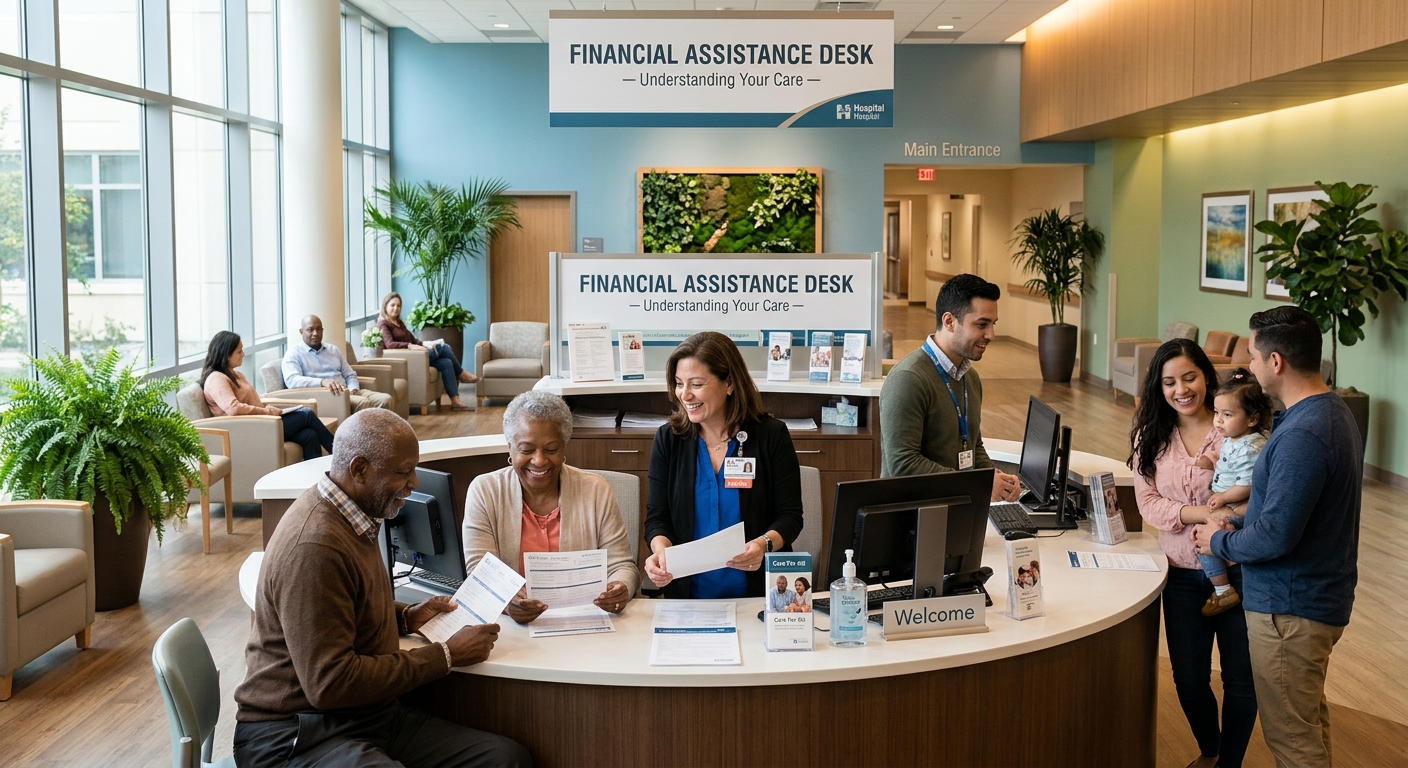
Hospital financial assistance programs, often called charity care, help eligible patients reduce or eliminate medical bills based on income, family size, and financial hardship. Most hospitals that receive nonprofit tax status are required to offer some form of assistance. Patients typically apply by submitting proof of income, household size, and residency, and approval can lead to discounted care, extended payment plans, or full bill forgiveness.
Medical bills have become one of the most common sources of financial stress for American families. A single emergency room visit, a planned surgery, or an unexpected hospital stay can produce a bill that rivals a mortgage payment. For patients without comprehensive insurance, or those whose insurance leaves them with high deductibles and copays, the financial fallout can be devastating.
What many patients don’t realize is that hospitals, particularly nonprofit institutions, are often required to offer financial assistance to those who qualify. These programs exist specifically to help people avoid insurmountable medical debt, yet they remain underused simply because patients don’t know they exist or assume they won’t qualify.
This guide breaks down what hospital financial assistance programs are, who typically qualifies, how the application process works, and what kind of savings patients might expect. Whether you’re facing a current bill or want to understand your options before a planned procedure, this information can help you take control of your medical expenses instead of letting them control you.
What Are Hospital Financial Assistance Programs?
Hospital financial assistance programs, sometimes called charity care programs, are policies that allow eligible patients to receive free or reduced-cost care based on their financial situation. Nonprofit hospitals in the United States are generally required under federal law to maintain a written financial assistance policy in order to retain their tax-exempt status. This requirement means that most community and nonprofit hospitals have some form of assistance available, even if it isn’t widely advertised.
These programs differ from insurance coverage and government assistance programs like Medicaid in a few key ways. Insurance works by pooling risk among many people who pay premiums, and coverage depends on the terms of the policy. Government programs like Medicaid are based on strict income eligibility rules set at the state and federal level. Hospital financial assistance, by contrast, is determined individually by each hospital’s own policy, and it specifically targets the gap left after insurance or lack of insurance leaves a patient with an unaffordable bill.
Financial assistance generally falls into a few categories:
- Charity care: Full or partial forgiveness of hospital bills for patients who meet income and asset requirements.
- Financial hardship programs: Assistance for patients who may not meet the strictest income thresholds but can demonstrate that a medical bill would create significant financial hardship.
- Payment plans: Structured, often interest-free, arrangements that let patients pay off balances over time instead of all at once.
Each hospital sets its own criteria, so the specifics can vary considerably from one institution to another. That’s why it’s worth checking directly with the hospital billing or patient financial services department rather than assuming your eligibility based on another hospital’s policy.
Who Qualifies for Hospital Financial Assistance?
Eligibility for hospital financial assistance programs is typically based on a combination of income, family size, and sometimes assets. Hospitals usually measure income against the Federal Poverty Level (FPL), with many offering full charity care to patients at or below a certain multiple of the FPL, and partial discounts on a sliding scale above that threshold.
Income-Based Eligibility
Most hospitals set income thresholds as a percentage of the FPL. Patients at or below the lowest threshold often qualify for free care, while those with moderately higher incomes may receive a percentage discount on their bill. The exact percentages vary by hospital, so reviewing the specific policy of the institution where you received care is essential.
Family Size Considerations
Because the Federal Poverty Level adjusts based on household size, a larger family with the same income as a smaller household may qualify for more assistance. Hospitals typically ask patients to report the number of people in their household when applying, which directly affects the calculation of eligibility.
Asset Limits and Other Factors
Some hospitals also consider assets such as savings accounts, property, or investments, though this practice varies. Patients with limited income but significant assets may face more scrutiny, while others may qualify based on income alone.
Special Circumstances
Beyond standard income and asset reviews, many hospitals make exceptions for patients facing unique hardships. These can include:
- Recent job loss or reduction in work hours
- Catastrophic or chronic illness with ongoing treatment costs
- Natural disasters or other events that disrupted income
- Uninsured status combined with high medical costs
If your situation doesn’t fit neatly into standard income brackets, it’s still worth applying and explaining your circumstances. Hospitals often have discretion to approve assistance on a case-by-case basis.
How Do You Apply for Hospital Financial Assistance?
Applying for hospital financial assistance generally follows a similar process across institutions, though exact requirements differ. Here’s what patients can typically expect.
Step 1: Locate the Application
Financial assistance applications are usually available through the hospital’s billing department, patient financial services office, or website. Many hospitals are required by law to make this information easily accessible, so don’t hesitate to call and ask directly if you can’t find it online.
Step 2: Gather Required Documentation
Hospitals typically request documentation to verify income and household information. Commonly required documents include:
- Recent tax returns
- Pay stubs or proof of income
- Proof of residency, such as a utility bill or lease
- Bank statements, in some cases
- Documentation of any special circumstances (job loss letters, medical records related to hardship, etc.)
Having these documents ready before starting the application can speed up the process considerably.
Step 3: Submit the Application
Applications can often be submitted online, by mail, or in person, depending on the hospital’s process. Some institutions also allow patients to apply by phone with the help of a financial counselor.
Step 4: Wait for Review and Notification
Processing times vary, but many hospitals aim to review applications within a few weeks. Patients are typically notified in writing whether they’ve been approved, partially approved, or denied, along with an explanation of next steps.
If a bill is already in collections or close to a payment deadline, it’s worth contacting the hospital immediately. Many institutions will pause collections activity while a financial assistance application is under review.
What Types of Hospital Financial Assistance Programs Are Available?
Hospitals generally offer a range of assistance options to accommodate different financial situations. Understanding each type can help you identify which might apply to you.
Charity Care Programs
Charity care is the most well-known form of assistance, offering full or partial forgiveness of medical bills for patients who meet income and asset criteria. This is often the first option hospitals consider for low-income or uninsured patients.
Discounted Payment Plans
For patients who don’t qualify for full charity care but still need help managing costs, many hospitals offer discounted rates combined with extended, often interest-free, payment plans. This allows patients to pay down balances gradually without accruing additional debt through interest or fees.
Emergency Assistance Funds
Some hospitals maintain separate funds specifically for emergency situations, such as sudden job loss, natural disasters, or urgent medical crises that weren’t anticipated. These funds can provide temporary relief while a patient’s broader financial assistance application is processed.
Sliding Scale Programs
Sliding scale programs adjust the amount owed based on a patient’s income relative to the Federal Poverty Level. Rather than an all-or-nothing approach, these programs provide graduated discounts, meaning patients who earn slightly more than the lowest income threshold still receive meaningful reductions in their bill.
Choose a payment plan if your income is too high to qualify for full charity care but a lump-sum payment still isn’t feasible. Choose to apply for charity care first if your income falls near or below the poverty line, since full forgiveness is generally the most beneficial outcome when available.
How Much Can You Save With Hospital Financial Assistance?
The amount of savings available through financial assistance depends heavily on the hospital’s specific policy, the patient’s income relative to the Federal Poverty Level, and the type of program applied. For patients who qualify for full charity care, the entire hospital bill may be forgiven. For those on a sliding scale, discounts might cover a significant portion of the balance, with the patient responsible for a reduced amount based on their income bracket.
Even patients who don’t qualify for a discount may benefit from extended, interest-free payment plans that make a large bill more manageable over time. Because hospital bills can range from a few hundred dollars to tens of thousands for complex procedures, the actual dollar savings vary enormously from case to case.
The key takeaway is that even partial assistance can make a meaningful difference. A patient facing a bill they cannot pay in full has far more options than simply paying out of pocket or ignoring the bill until it goes to collections. Applying for financial assistance, even without certainty of approval, costs nothing and can only improve a patient’s financial position.
Take the First Step Toward Reducing Your Medical Debt
Hospital financial assistance programs exist precisely because hospitals and policymakers recognize that medical costs can overwhelm even responsible, hardworking families. If you’re facing a hospital bill that feels unmanageable, the most important step is simply to ask. Contact the hospital’s patient financial services department, request a copy of their financial assistance policy, and gather the documentation needed to apply.
Don’t assume you won’t qualify. Eligibility criteria vary widely, and many hospitals are willing to work with patients facing special circumstances even if they fall outside standard income thresholds. Acting early, ideally before a bill goes to collections, gives you the best chance of securing meaningful relief.
Frequently Asked Questions About Hospital Financial Assistance
Does every hospital offer financial assistance programs?
Not every hospital is required to offer financial assistance, but most nonprofit hospitals must maintain a financial assistance policy to keep their tax-exempt status. For-profit hospitals may offer assistance as well, though it isn’t always mandated, so it’s worth asking directly.
Can I apply for financial assistance after my bill has gone to collections?
Yes, in many cases you can still apply even after a bill has been sent to collections. Contact the hospital’s billing department as soon as possible, since some hospitals will pause collections activity while an application is under review.
Will applying for financial assistance affect my credit score?
Applying for financial assistance itself does not affect your credit score. However, unpaid medical bills that go to collections before you apply could already have an impact, which is why applying early is beneficial.
Do I need insurance to qualify for hospital financial assistance?
No, financial assistance programs are available to both insured and uninsured patients. These programs are specifically designed to help with out-of-pocket costs, deductibles, and bills that insurance doesn’t cover.
How long does it take to find out if I’m approved?
Processing times vary by hospital, but many aim to notify patients within a few weeks of receiving a complete application. Submitting all required documentation upfront can help avoid delays.