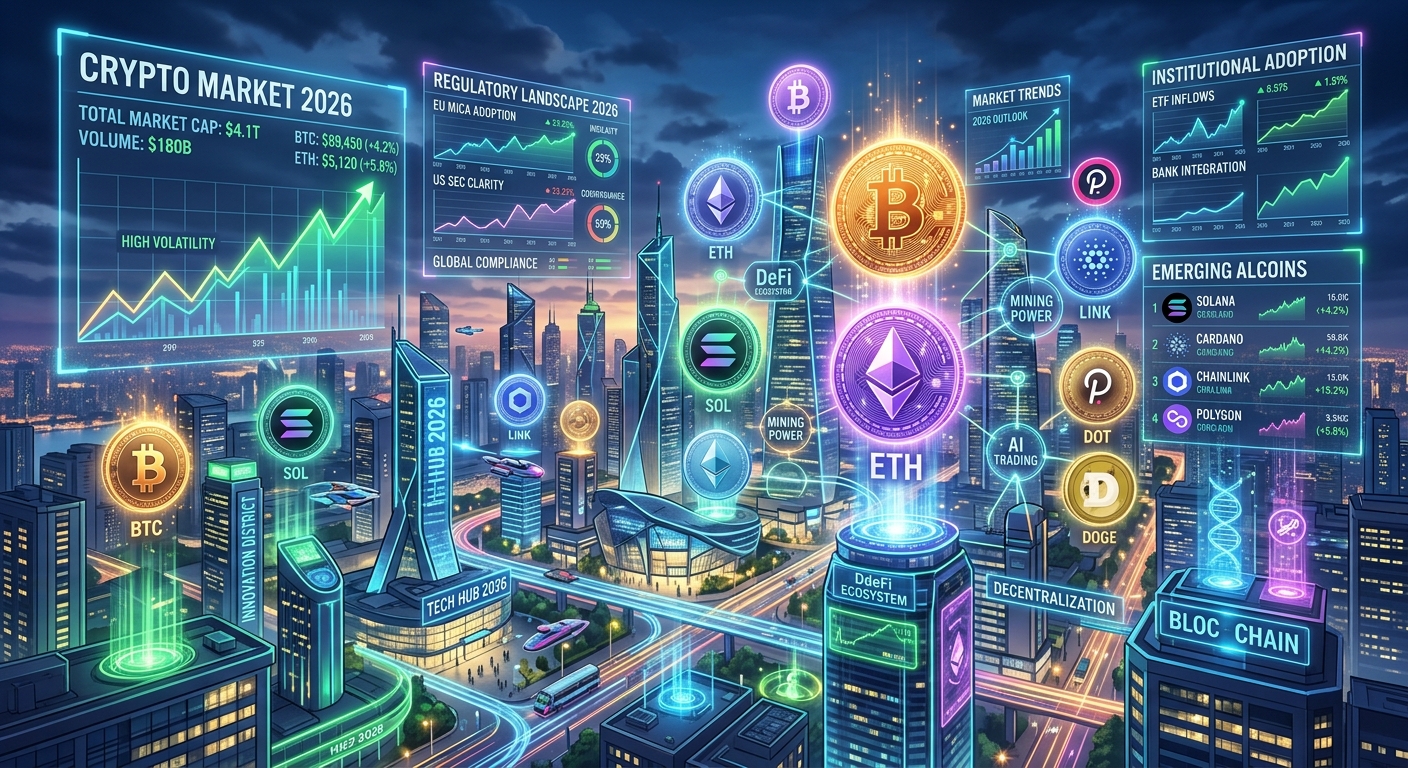
The best crypto investments to research in 2026 include established assets like Bitcoin and Ethereum, Layer 2 scaling solutions, select altcoins with real-world utility, and regulated stablecoins. Investors should prioritize due diligence, diversification, and secure custody practices rather than chasing short-term price movements.
Cryptocurrency has moved far beyond its early reputation as a speculative curiosity. Institutional adoption, clearer regulatory frameworks in major markets, and growing integration with traditional finance have reshaped the asset class over the past several years. By 2025, digital assets had become a mainstream conversation in boardrooms and household budgets alike, not just among early adopters and tech enthusiasts.
That evolution makes 2026 a pivotal year for anyone considering a crypto allocation. Markets that mature tend to separate durable projects from fleeting trends, and distinguishing between the two requires research, not guesswork. Investors who take the time to understand the technology, the teams behind it, and the macroeconomic forces at play are better positioned to make informed decisions.
This guide walks through what’s shaping the crypto market heading into 2026, which categories of digital assets deserve a closer look, the risks every investor should weigh, and where to find credible research tools. None of this is financial advice — it’s a framework for doing your own homework before committing capital.
What Factors Will Shape the Crypto Market in 2026?
Several forces are converging to influence how cryptocurrency markets behave in 2026.
How Are Major Cryptocurrencies and Trends Evolving?
Bitcoin and Ethereum continue to anchor the broader market, serving as reference points for liquidity and investor sentiment. Alongside these established assets, newer trends are gaining traction, including tokenized real-world assets, decentralized finance (DeFi) protocols maturing into more institutional-grade products, and renewed interest in blockchain infrastructure that supports faster, cheaper transactions.
How Is the Regulatory Landscape Changing?
Regulatory clarity has been one of the biggest swing factors for crypto markets in recent years. Jurisdictions around the world continue to refine how they classify digital assets, tax crypto transactions, and oversee exchanges. Investors should watch for regulatory developments in their home country and in major markets like the United States, the European Union, and parts of Asia, since policy shifts can directly affect asset valuations and market access.
What Macroeconomic Factors Influence Crypto Markets?
Cryptocurrency doesn’t exist in a vacuum. Interest rate policy, inflation trends, and overall risk appetite in traditional markets all spill over into crypto prices. When investors are optimistic about economic growth, capital tends to flow into higher-risk assets, including digital currencies. Conversely, tighter monetary policy or economic uncertainty can pull liquidity out of crypto markets just as quickly.
Which Cryptocurrencies Are Worth Researching in 2026?
Not every digital asset deserves equal attention. Here’s how to think about the categories worth exploring.
Which Established Coins Have a Proven Track Record?
Assets like Bitcoin and Ethereum have weathered multiple market cycles and built substantial ecosystems around them. Bitcoin remains the most widely recognized store-of-value asset in the space, while Ethereum’s smart contract functionality underpins a large share of DeFi and tokenization activity. Their longevity and liquidity make them common starting points for investors beginning their research.
What Role Do Layer 2 Solutions Play in Blockchain Scaling?
Layer 2 networks are built on top of existing blockchains to improve transaction speed and reduce fees without compromising the security of the underlying chain. As adoption of blockchain technology grows, scaling solutions become increasingly important for usability. Researching which Layer 2 projects have genuine developer activity and user adoption — rather than just marketing buzz — is a worthwhile exercise for any investor.
What Makes an Emerging Altcoin Worth Investigating?
Smaller or newer cryptocurrencies can offer innovative use cases, from decentralized identity solutions to supply chain tracking. Choose altcoins for deeper research if the project solves a specific, verifiable problem and has a transparent team and active development community. Be cautious of altcoins if transparency is low or if hype on social media outpaces any evidence of real-world use.
How Are Stablecoins Evolving and What Role Do They Play?
Stablecoins — cryptocurrencies pegged to assets like the U.S. dollar — continue to play a central role in crypto markets by providing a less volatile medium for trading and transactions. Regulatory scrutiny of stablecoin issuers has increased, which has pushed many providers toward greater transparency around reserves. Understanding how a stablecoin is backed and audited is essential before using it as part of a broader strategy.
What Risks Should Investors Consider Before Buying Crypto?
Every investment carries risk, and cryptocurrency is no exception. In fact, several risk factors are unique to this asset class.
How Volatile Is the Cryptocurrency Market?
Crypto markets are known for sharp price swings driven by sentiment, news cycles, and liquidity shifts. Choose a smaller allocation if volatility tolerance is low, and consider dollar-cost averaging — investing fixed amounts at regular intervals — to reduce the impact of short-term price swings.
What Regulatory Risks Affect Crypto Investments?
Because regulation is still evolving in many regions, policy changes can affect which assets are accessible, how they’re taxed, or whether certain platforms can continue operating. Staying informed about regulatory developments in your jurisdiction is a critical part of ongoing due diligence.
How Should Investors Approach Security and Custody?
Securing crypto assets requires more hands-on responsibility than holding traditional securities. Hardware wallets, which store private keys offline, offer stronger protection than leaving assets on an exchange. Two-factor authentication, strong unique passwords, and caution around phishing attempts are all baseline practices for anyone holding digital assets.
Why Does Diversification Matter Within a Crypto Portfolio?
Concentrating capital in a single coin or sector increases exposure to that asset’s specific risks. Spreading investments across established coins, infrastructure projects, and a measured allocation to higher-risk altcoins can help balance potential upside against downside exposure.
Where Can Investors Find Reliable Crypto Research?
Good decisions start with good information.
Which Platforms Offer Reliable Market Data?
Established data aggregators track pricing, trading volume, and market capitalization across thousands of digital assets, offering a useful starting point for comparing projects. Many also provide historical charts and on-chain data that can reveal adoption trends beyond price alone.
Where Can Investors Find Expert Communities and Education?
Developer forums, project documentation, and community discussion channels often provide more substantive insight than social media hype. Look for sources that disclose their methodology and potential conflicts of interest, since unbiased analysis is harder to find in a market that still attracts promotional content.
What Should Be on a Due Diligence Checklist Before Investing?
Before investing in any cryptocurrency, consider reviewing:
- The project’s whitepaper and stated use case
- The development team’s track record and transparency
- Trading volume and liquidity across exchanges
- Regulatory status in your jurisdiction
- Security audit history, if applicable
- Community engagement and developer activity
Start Your Crypto Research Early in 2026
Cryptocurrency markets reward preparation over impulse. The investors most likely to make sound decisions in 2026 will be those who understand the technology behind their chosen assets, stay current on regulatory shifts, and build portfolios that reflect their actual risk tolerance.
If you’re starting your research now, begin with the established assets to build a baseline understanding, then branch into scaling solutions and emerging projects as your knowledge deepens. Revisit your due diligence checklist regularly, since the market — and the information available about it — changes quickly.
Frequently Asked Questions
Is cryptocurrency a good investment in 2026?
Whether cryptocurrency is a good investment depends on individual risk tolerance, investment goals, and time horizon. Crypto remains a volatile asset class, so it’s best suited for investors who can tolerate significant price swings and who treat it as one part of a diversified portfolio.
How much should I invest in crypto as a beginner?
There’s no universal figure, but many financial professionals suggest limiting high-risk assets like crypto to a small percentage of an overall portfolio — an amount you could afford to lose without affecting your financial stability.
What’s the difference between researching a coin and timing the market?
Researching a coin involves evaluating its technology, team, and use case to assess long-term viability. Timing the market means trying to predict short-term price movements, which is far less reliable and generally discouraged by experienced investors.
Are stablecoins safer than other cryptocurrencies?
Stablecoins are generally less volatile because they’re pegged to assets like the U.S. dollar, but they still carry risk depending on how transparently and securely their reserves are managed.
What’s the biggest mistake new crypto investors make?
One of the most common mistakes is investing based on hype or social media trends without verifying the underlying project’s fundamentals, team credibility, or real-world use case.